English (UK)
  Greek (Greece)
 With the active participation of institutional representatives, social partners, education and training experts, and vocational training providers from both Greece and the European Union, the final international online conference for the dissemination of the results of the project “Continuing Vocational Training link to micro-credentials” (Micro-CVET) was successfully held on Wednesday, August 26, 2026.
This pioneering project was implemented over a three-year period (2023–2026) by the National Organisation for the Certification of Qualifications & Vocational Guidance (EOPPEP) in its institutional capacity as the designated National Reference Point (NRP) for the European Quality Assurance in Vocational Education and Training (EQAVET) network, co-funded by the European Union's ERASMUS+ program (Call: ERASMUS-EDU-2023-EQAVET-IBA, Project No: 101124852).
Strategic Importance of the Project
The core objective of the Micro-CVET project was to establish a systematic focus on the validation and recognition of learning outcomes achieved through Continuing Vocational Training (CVET), leading to the issuance of quality-assured Micro-credentials. This initiative is fully aligned with the Council of the European Union Recommendation of June 16, 2022 on a European approach to micro-credentials for lifelong learning and employability.
Opening the conference, the President of the Board of Directors of EOPPEP, Mr. Evaggelos Karamintzios, and the Managing Director of EOPPEP, Dr. Georgia Reoutsika, emphasized EOPPEP's institutional commitment to leading national efforts in building a reliable, flexible, and modern skills ecosystem in Greece. A welcoming address was also delivered by Ms. Anette Curth, Senior Technical Expert at ICF representing the EQAVET Secretariat, who highlighted the broader European dimension of the project and the critical role of quality assurance.
Key Deliverables and the National Policy Proposal
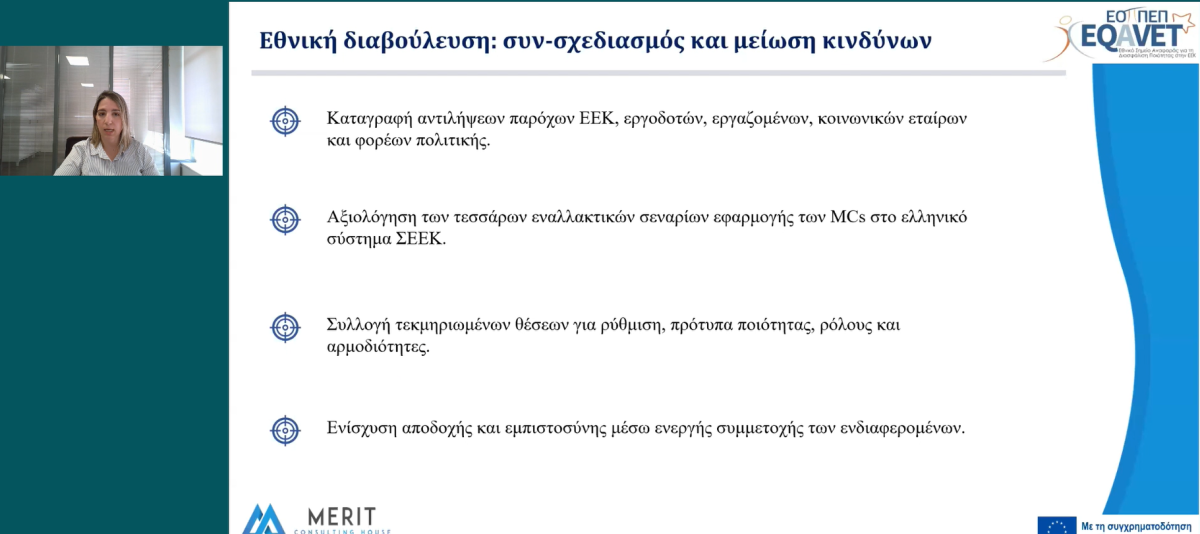
A central highlight of the conference was the presentation of the “Final Inception Document on Micro-credentials” [D3.6 Final Inception Document on Micro-credentials] by Mr. Konstantinos Papaefstathiou, Head of EOPPEP's National Quality System Department, and Ms. Ioanna Leotsakou, National Expert representing Merit Consulting House IKE. This comprehensive document represents the culmination of a multi-level "triangulated" research methodology comprising extensive desk research, e-surveys of SAEK and KDBM directors, focus groups, and in-depth institutional interviews.
The national policy proposal put forward by EOPPEP is structured around five (5) strategic pillars:
- Institutional Framework: Defining definitions, legal foundations, roles, and accreditation responsibilities.
- Quality Assurance: Establishing standards aligned with EQAVET principles, provider criteria, and assessment mechanisms.
- Prior Learning and Learning Outcomes: Integrating validation pathways to utilize micro-credentials for recognizing non-formal, informal, and experiential learning.
- Labour Market Relevance: Engaging employers and social partners in designing learning outcomes and diagnosing sector-specific skill needs.
- Digital Inclusion and Access: Developing the necessary digital infrastructure (including Digital Wallets and Europass EDCI interoperability) while implementing guidance measures for vulnerable groups.
The presentation also detailed four (4) potential implementation scenarios, recommending a controlled, voluntary pilot program with a distinct "Quality Label" (Scenario 1) alongside a targeted implementation in critical economic sectors (Scenario 2) as the optimal starting point for Greece.
European Perspectives and VET Providers’ Insights
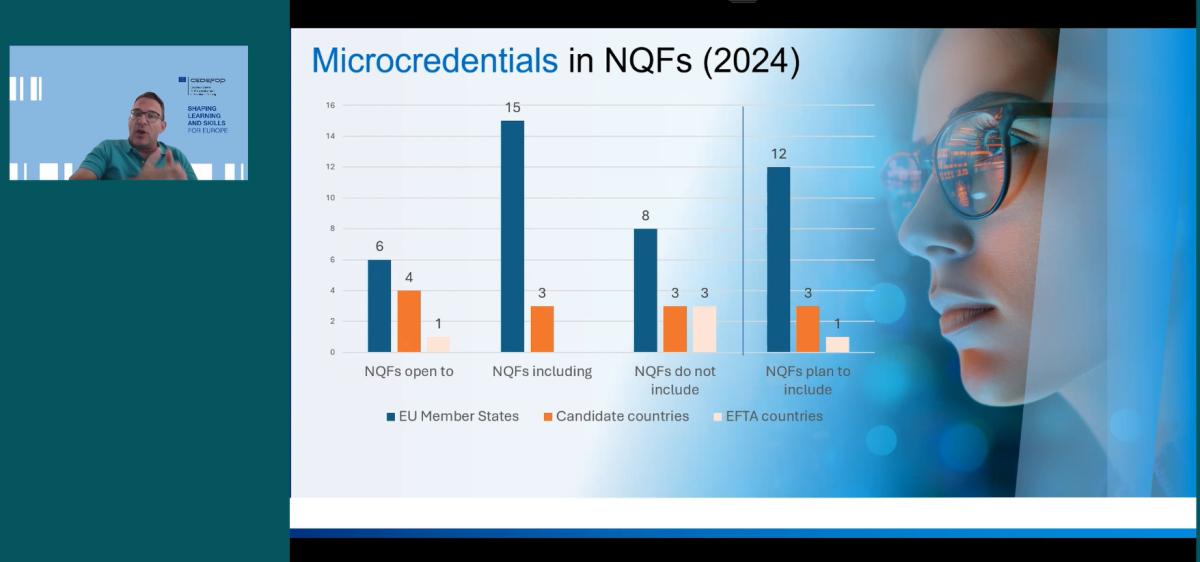
Representing Cedefop, Mr. Iraklis Pliakis (Expert in Qualifications and Credentials) presented valuable findings from Cedefop's European research on the added value of micro-credentials for upskilling, reskilling, and employability, while noting the need to mitigate the risks associated with the proliferation of unregulated credentials. Mr. Stefano Tirati, CEO of Learningdigital and Founder/Executive of the World Alliance for Microcredentials (WAM) Foundation, presented practical international case studies demonstrating the real-world utility of micro-credentials for employers and employees alike.
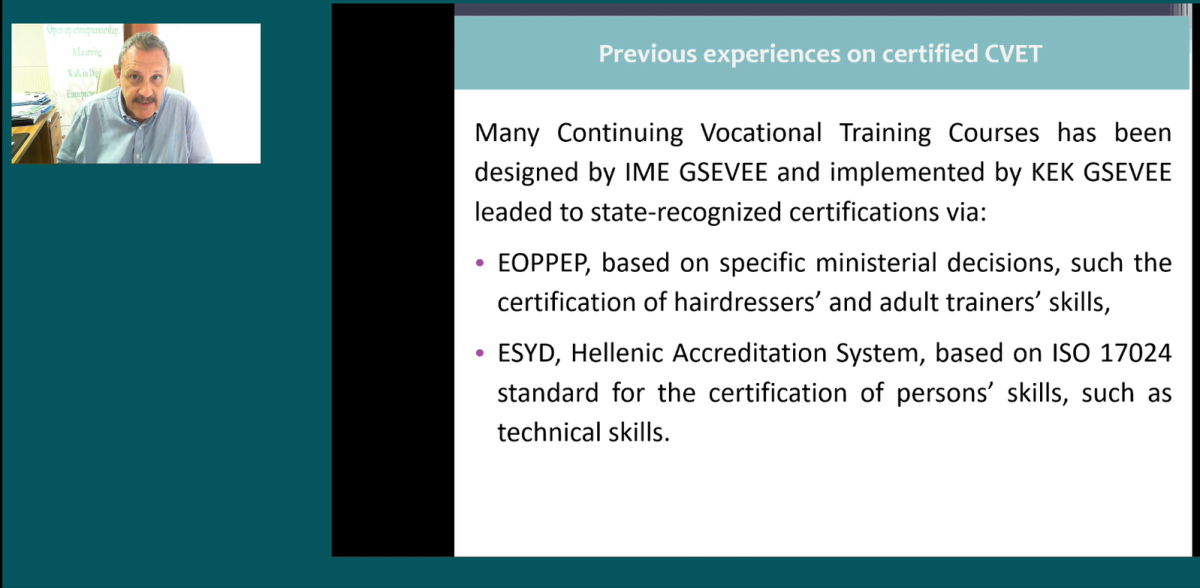
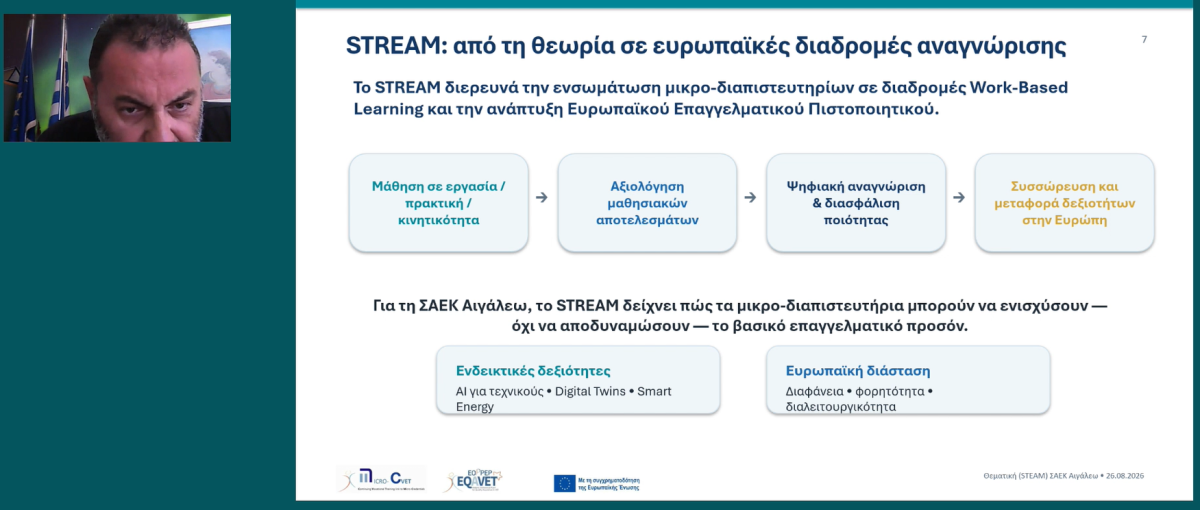
Providing the critical perspective of training providers, Dr. Dimitrios Kiriakos (Director of the Thematic STEAM SAEK of Egaleo) and Mr. Vassilis Siomadis (Head of the European Programmes Department of IME-GSEVEE Thessaloniki and EVTA Board Member) emphasized that micro-credentials must act as a complement to—and not a replacement for—full vocational qualifications. They highlighted how MCs can bring vital agility to the vocational training sector to address fast-evolving local and industry skill demands.
Furthermore, European educational policy expert Mr. Keith Brumfitt shared the key conclusions and recommendations from the International Peer Review hosted by EOPPEP in Athens on June 25–26, 2026. The Peer Review, which involved designated quality assurance experts from five European countries (Germany, Italy, Malta, Serbia, and Spain), highly commended Greece's thorough consultative process, its realistic scenario planning, and the strength of its existing digital systems.
Roadmap for the Future
The conference concluded with the outline of a phased National Implementation Roadmap:
- Phase A (2026–2027): Establishing the regulatory and legislative framework, defining the national governing authority, and launching controlled pilots in 3–5 high-demand sectors.
- Phase B (2027–2029): Evaluating pilot results, expanding to additional economic sectors, initiating Scenario 4 (Assessment and Validation of Prior Learning - AVPL), and deploying a dedicated digital platform (Digital Wallet / Europass EDCI integration).
- Phase C (2029+): Achieving full horizontal, systemic integration and interoperability.
Through the successful execution of the Micro-CVET project, EOPPEP solidifies its central institutional role in quality-assuring vocational education and training in Greece, successfully paving the way to transition micro-credentials from an isolated innovation into a trusted, nationwide system.